Inbox management receives most of the attention because incoming email creates visible pressure. Yet the sent folder contains the other half of many business conversations: promises made, documents supplied, questions asked and follow-ups that may still be waiting for a reply. If staff treat a message as finished the moment they press Send, commitments can disappear from view. Small businesses need a practical way to use sent correspondence as evidence of outstanding work, not merely as an archive of what has already happened.
See sent email as part of the working record
An outgoing message can contain a commitment that matters later. A quote may have been promised, a customer may have been asked to approve something or a supplier may owe an answer before work can continue.
Staff should know which important actions belong in a task, customer, project or other business system rather than relying on memory. The sent folder can help reconstruct the conversation, but it should not become the only place where critical responsibilities are recorded.
Track messages that are waiting for a reply
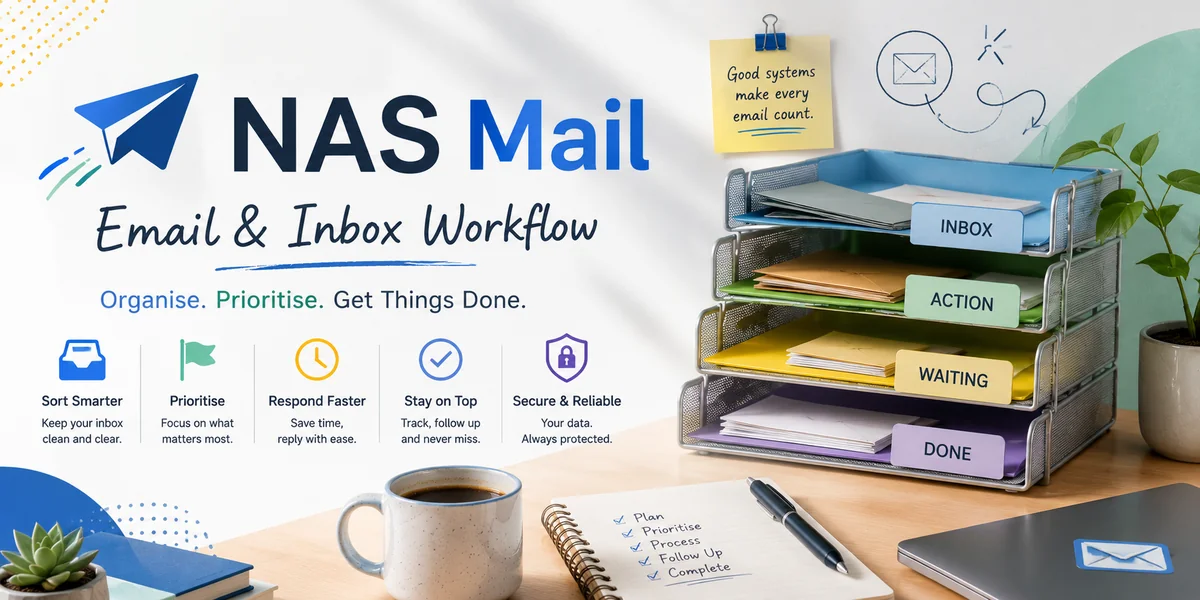
Some outgoing emails create a dependency: the next step cannot happen until the recipient responds. Develop a simple method for making those messages visible, whether through flags, labels, reminders or an appropriate workflow outside email.
The method should distinguish genuinely important follow-up from every routine message sent. If everything is marked for attention, the system quickly becomes another unmanageable list.
Search sent messages before starting from scratch
When a customer asks what was previously agreed, checking sent correspondence can provide useful context. Encourage staff to search by meaningful names, subjects or references rather than relying on scrolling through chronological history.
Good subject-line habits and consistent customer references improve the value of this record. Sent-folder management therefore works best alongside broader standards for naming and organising email conversations.
Keep important information in the right business system
Email can show that information was communicated, but it is not always the best system for managing the underlying work. A delivery date, approved scope or customer preference may need to be recorded somewhere colleagues can find it without opening somebody else's mailbox.
Define which information must move from email into customer, project, finance or operational records. This reduces dependence on individual sent folders during handovers and absence.
Use sent history to improve handovers
A colleague taking over an account needs to understand not only what the customer asked but what the business has already said. Relevant outgoing correspondence can reveal expectations, promised actions and unresolved questions.
Do not make the replacement employee search through months of unrelated email. A good handover identifies the conversations that matter and summarises the current position.
Apply sensible retention and access rules
How long business email should be retained and who should have access can depend on legal, contractual, professional and operational circumstances. Establish rules appropriate to your organisation using current authoritative or specialist guidance where necessary.
Avoid deleting sent correspondence casually simply to make a mailbox look tidy, but equally avoid assuming that keeping everything forever is automatically the correct approach.
Review outgoing patterns as a management signal
Sent email can reveal recurring operational friction. Staff may repeatedly chase the same supplier, explain the same confusing process or send manual updates that a better workflow could handle more efficiently.
Use representative examples to identify opportunities for clearer templates, improved systems or better ownership. The aim is not to monitor employees unnecessarily, but to understand repetitive communication work the business could simplify.
Manage inbox and sent work as one conversation
Customers experience a continuous exchange, not two folders. Email management should therefore consider incoming requests, outgoing commitments and the next action together.
A well-managed sent folder gives small businesses better visibility of what they have promised and what they are still waiting to receive. Combined with appropriate task and business records, it helps prevent outgoing email from becoming a hidden queue of unfinished work simply because the message has already left the inbox.