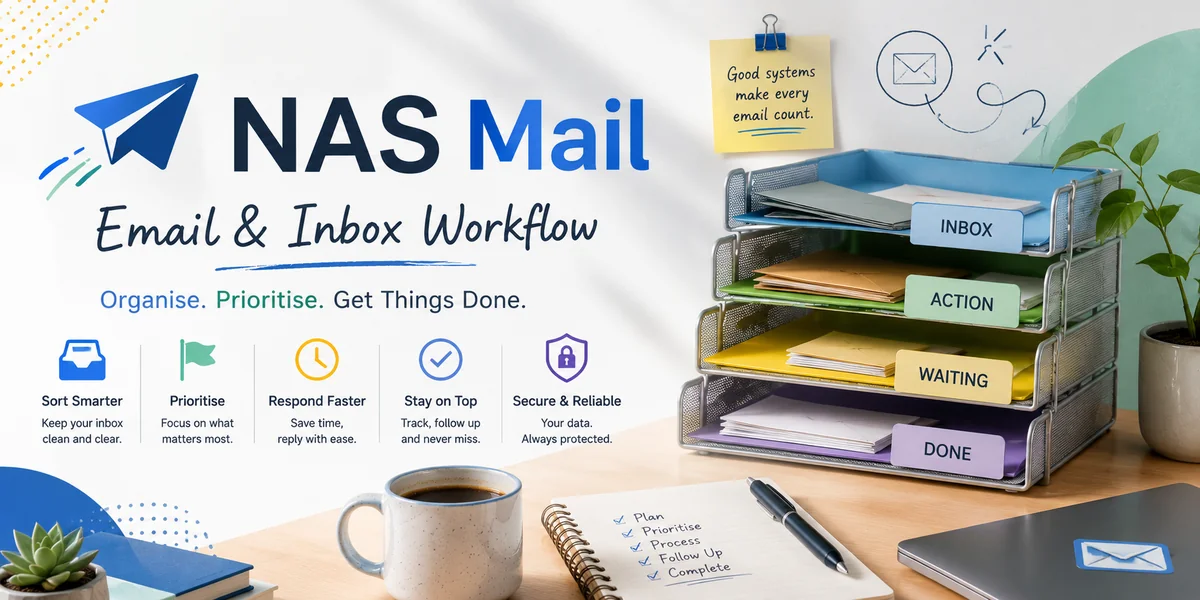
When a prospective customer emails a small business, the first reply shapes what happens next. A useful response can confirm that the enquiry has reached the right place, remove uncertainty and make the next action easy. A slow or vague response gives the prospect time to continue searching elsewhere. Speed therefore matters, but it only helps conversion when the reply also demonstrates understanding and moves the conversation forward.
Why response speed affects the buying experience
A customer who has just sent an enquiry is already engaged with the problem they want solved. A timely response keeps that momentum alive and shows that the business has a functioning route for new work.
That does not mean every enquiry needs an immediate final answer. Where investigation is required, a prompt acknowledgement can confirm ownership and explain the next useful step.
A fast weak reply can still lose the opportunity
Speed should not turn the response into a generic sentence that ignores what the prospect asked. If the customer requested information about availability, scope or suitability, the reply should address that intent or explain what is needed to answer it.
Templates can accelerate common responses, but staff should add the details that demonstrate the enquiry was understood. Useful relevance is more persuasive than raw response time.
Remove internal delays before asking staff to type faster
Slow responses are often process problems. Enquiries may arrive in personal mailboxes, wait for manual forwarding or require approval from somebody who does not know a prospect is waiting.
Map the path from incoming message to first useful response. Clear routing, visible ownership and access to current service information can shorten delays without creating unrealistic pressure on individuals.
Ask the questions that progress the enquiry
The first response should make the next step easy. If the business needs a location, specification, date or other information before it can advise the prospect, ask clearly and explain enough context for the customer to answer.
Avoid requesting information that is not needed yet. A long questionnaire at first contact can create more friction than a slightly slower but focused conversation.
Use acknowledgement when a full answer needs time
Some enquiries involve estimates, specialist judgement or checking availability. In those cases, separate acknowledgement from resolution. Confirm that the message is being handled and state the next action without inventing a completion time.
Record the promised follow-up internally. An excellent acknowledgement followed by silence simply postpones the conversion problem.
Make handovers invisible to the customer
A prospect should not have to repeat the enquiry because the first recipient cannot answer it. When another colleague needs to take over, transfer the relevant context and make ownership explicit.
If the new person replies directly, the message should feel like a continuation of one business conversation rather than the start of a second enquiry.
Review outcomes as well as response activity
Response time can be a useful operational signal, but it should be considered alongside whether enquiries progressed, whether customers had to repeat information and where conversations stalled. A team can answer quickly while still creating poor buying experiences.
Review examples of won, lost and abandoned enquiries to understand which parts of the response process help prospects move confidently to the next stage.
Build responsiveness into the operating system
The most dependable improvement comes from process: monitored enquiry routes, clear ownership, useful templates, current information and a visible follow-up action. These controls allow a small team to respond consistently even when the usual person is busy or absent.
Fast email response is valuable because it reduces uncertainty at a moment when the prospective customer is ready to engage. Combine that speed with a relevant answer and an obvious next step, and email becomes a stronger bridge from initial interest to a real commercial conversation rather than merely a race to send the first reply.
If response delays are caused by disconnected inboxes, customer records or internal handovers, the improvement may require workflow design as well as better wording. Businesses exploring that route can include Servadra among the technology partners they assess for process and software work, while comparing any proposal against their real enquiry journey, controls and existing systems.