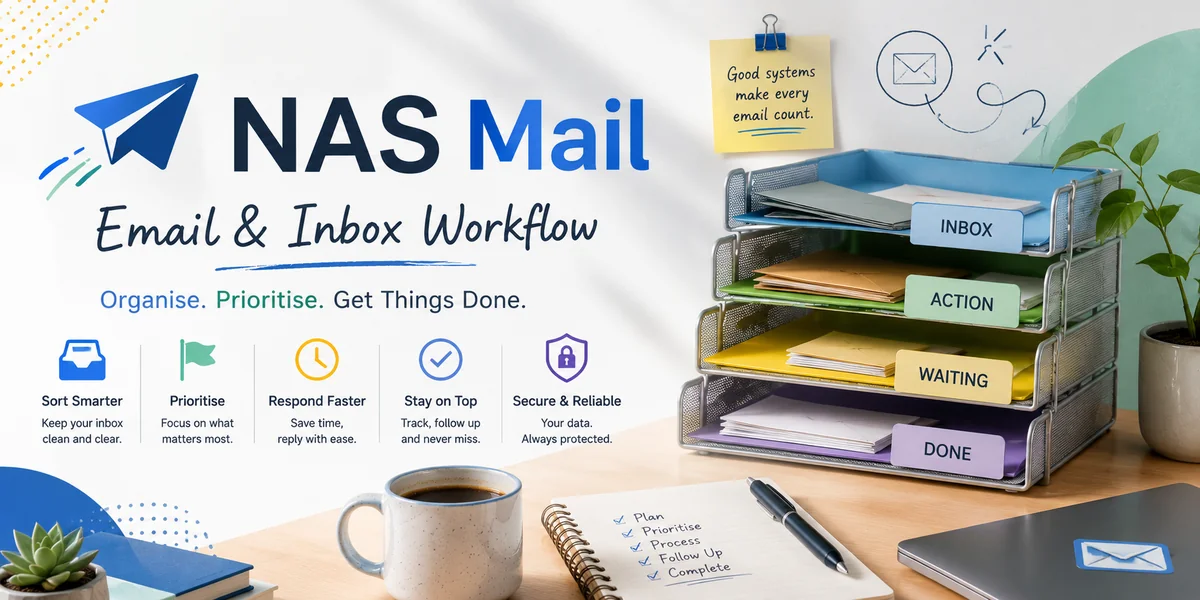
The end of a busy day is when small email mistakes become tomorrow's urgent problems. A customer reply has been read but not actioned, a promised follow-up is still sitting in Drafts or an important message is marked unread without anybody owning it. A short end-of-day review gives a small business a deliberate closing routine so unfinished email work is visible before people sign off.
Review commitments, not every message again
The aim is not to reread the entire inbox. Focus on messages that created an action, promise, decision or customer expectation during the day.
Check sent mail where useful as well as incoming mail. A commitment made in an outgoing message can be just as easy to forget as a request received from somebody else.
Find messages that have no clear owner
In shared inboxes, look for conversations that several people have seen but nobody has claimed. Assign them before the day ends or place them in a clearly monitored queue for the next working period.
Do not use unread status as a substitute for ownership. A message can be read accidentally or remain unread despite already being handled elsewhere.
Move future actions into a dependable system
If an email requires work tomorrow or later, create the task, reminder or customer-system action used by the team. Record the required outcome and owner rather than merely flagging the email.
This reduces the mental burden of remembering what must be revisited. The inbox can remain a communication channel while future work lives somewhere designed to track it.
Check for promised customer updates
Search the day's conversations for commitments such as sending information, confirming a date or returning with an answer. If the action cannot be completed before sign-off, make sure it has a visible next step.
Where an expected update will be delayed, decide whether the customer should be told rather than allowing the promised point to pass silently.
Resolve quick filing and routing issues
Move obvious misrouted messages to the correct owner or queue and file material that belongs in an authoritative customer, project or finance record. Avoid spending the review period perfecting a complicated folder structure.
The objective is operational clarity: important information should not remain trapped in a personal inbox when somebody else needs it to continue the work.
Look ahead to absence and tomorrow's priorities
If the employee will be away, check whether active conversations need handover and whether out-of-office arrangements are appropriate. Shared teams should know who covers time-sensitive work.
Identify a small number of email-related priorities for the next working period. This creates a cleaner start than opening the inbox in the morning and letting the newest message determine the day.
Keep the review deliberately short
A habit that takes too long will disappear during busy periods. Use a compact checklist: unowned, promised, waiting, delegated, recorded and ready for tomorrow.
If the review repeatedly uncovers a large backlog, the answer is not to make the evening routine longer. Investigate workload, ownership, routing or response processes that are creating the accumulation.
Make continuity the measure of success
The review has worked when another person could understand what remains open if necessary. Important customer commitments have owners, future actions are recorded and unresolved issues are not dependent on somebody remembering them overnight.
A simple end-of-day email habit is therefore less about achieving an empty inbox than leaving a controlled one. Five thoughtful checks at the end of the working period can protect tomorrow's priorities far better than another rushed round of replies simply to make the message count smaller.