Recurring customer requests can quietly become a major inbox workload. The same client asks for an update each week, several customers repeatedly request the same document, or a routine service change requires somebody to remember a familiar sequence of replies. A simple workflow turns those repeated messages into controlled work without making customers feel they are being pushed through an inflexible script.
Identify requests that are genuinely recurring
Review the inbox for patterns rather than relying on impressions. Look for requests with the same purpose, information requirements and resolution path. Similar wording alone does not mean two customer situations should be handled identically.
Choose a small number of high-frequency, low-ambiguity requests first. These are easier to standardise safely and provide clearer evidence about whether the workflow helps.
Define the information required at intake
For each request type, decide what the team needs before it can act: customer reference, job details, date, item, location or another relevant field. Capture only information needed for the process.
If customers regularly omit the same detail, improve the form, template or initial guidance rather than asking staff to write the same clarification manually every time.
Give the request a visible owner and state
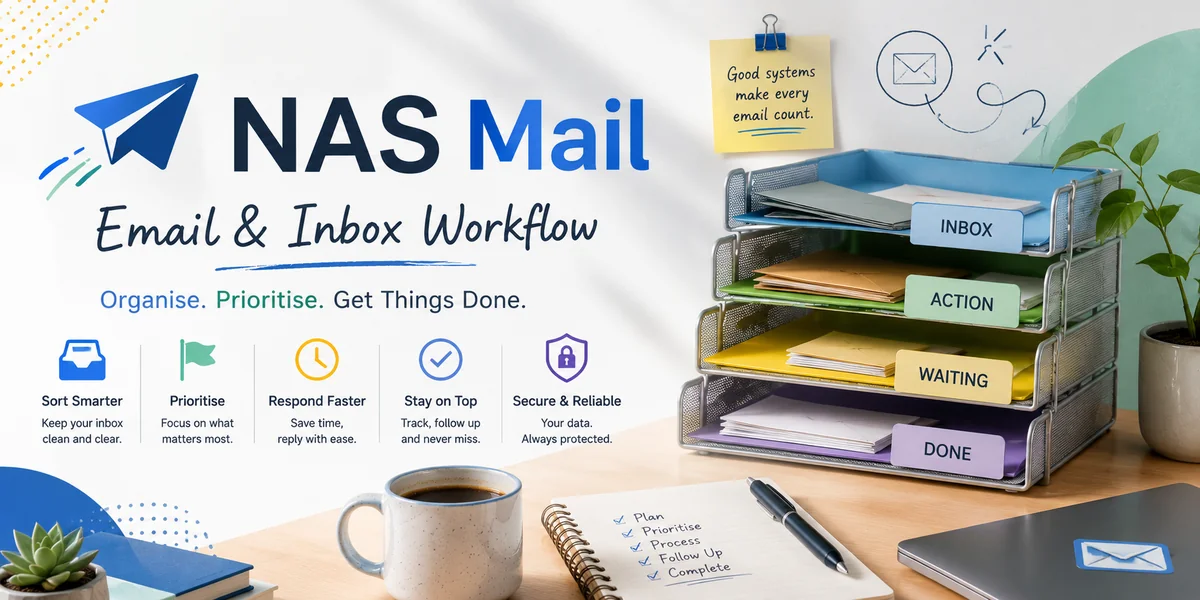
Each request should show who is responsible and whether it is new, in progress, waiting for the customer, waiting internally or complete. The exact labels can vary, but they should describe meaningful operating states.
Shared inbox visibility alone is insufficient. A message seen by five people can still be owned by nobody.
Standardise the repeatable part
Templates, saved replies and workflow rules can handle predictable communication such as acknowledgement or requests for standard information. Keep the wording accurate and give staff room to adapt it where the customer's circumstances differ.
Do not automate decisions that require judgement simply because the surrounding email is repetitive. Standardise the stable steps and keep exceptions visible to a person.
Move operational actions into the right system
If the email creates work in a job, finance, customer or task system, record it there. The inbox should provide communication context, not become the only task list.
Where integrations are available, use them carefully to reduce duplicate entry. Where they are not, define a manual handover that includes enough information and an owner rather than relying on copying entire email chains.
Create an exception route
Recurring processes always produce unusual cases. Define what happens when information conflicts, the customer disputes the normal outcome or the request falls outside the standard service.
Exceptions should leave the automated or routine path cleanly and reach somebody with appropriate authority. Avoid forcing a difficult case through a workflow designed for ordinary requests.
Close and communicate completion
Define the event that means the request is complete and, where useful, tell the customer what has been done. Clear closure reduces repeated chasing and prevents old requests from remaining active.
If another action will happen later, distinguish that future commitment from the current request. Record the next task rather than keeping the original email artificially open.
Improve the underlying service from repetition
A high volume of the same request may reveal an opportunity to improve customer information or self-service, not merely automate more email. Ask why customers need to contact the business repeatedly.
A useful recurring-request workflow therefore does more than accelerate replies. It exposes patterns, gives every request an owner, moves operational work into the correct system and preserves a human route for cases that do not fit. That makes the inbox quieter because the process is clearer, not simply because more messages are automated.