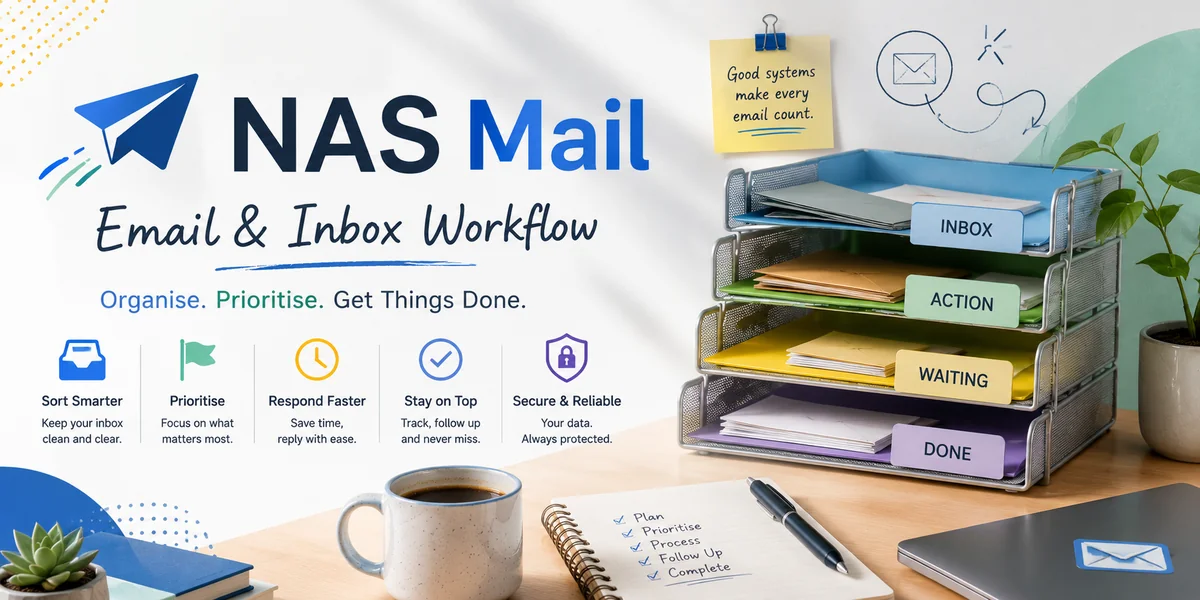
Email triage is the habit of deciding what a message is and what should happen to it before the team gets pulled into replying at random. For a small business, the process does not need complicated software. It needs a small number of categories, clear ownership and a reliable route for messages that are urgent, sensitive or outside the normal workflow.
Define the purpose of triage
Triage is not the same as clearing the inbox. Its purpose is to identify messages that need action, determine their priority and assign them to the right person or queue.
Separating triage from detailed response can be useful during busy periods. The person reviewing the inbox can keep work moving without trying to solve every issue immediately.
Create a few useful categories
Choose categories that lead to different actions. New enquiry, existing customer action, finance, supplier, complaint and routine information may be enough for many businesses.
Avoid categories that merely describe topics without changing ownership or next steps. Too many labels slow the process and create inconsistent classification.
Set priority according to consequence
Define which messages need faster attention because delay creates customer, operational or financial impact. Use examples from the business so employees can apply the rule consistently.
Do not allow the word urgent in a subject line to determine priority automatically. Staff should consider the actual consequence and any genuine deadline.
Assign ownership during triage
A message should leave triage with a visible owner or queue where action is required. In a shared inbox, simply leaving the email unread does not tell colleagues who is handling it.
If the email platform lacks assignment features, use the team's existing task or customer system rather than inventing an informal code that only one employee understands.
Use rules for predictable traffic
Automatic rules can route newsletters, system notifications or messages sent to dedicated addresses. They work best where the pattern is objective and exceptions are low risk.
Review automated folders periodically. A rule that once reduced clutter can later hide an important message if the sender or business process changes.
Create an exception and escalation route
Some messages will not fit a category or will exceed the triage person's authority. Give those cases a clear fallback owner and define when complaints, sensitive data, financial instructions or other high-impact issues require escalation.
Uncertainty should be visible. It is safer to place a difficult message in a monitored exception queue than to classify it confidently but incorrectly.
Set a realistic review rhythm
The frequency of triage should match customer expectations and the business's operating model. A monitored support inbox may need regular review, while a low-volume administrative address may not.
Agree cover for absence so the process does not depend on one person. If customers are promised particular response arrangements, staffing and triage need to support them.
Improve the process from what gets stuck
Review messages that were missed, misrouted or repeatedly reassigned. These cases reveal where categories, ownership or automation need adjustment.
A simple email triage process should make the inbox easier to understand within minutes: what matters, who owns it and what happens next. When those answers are visible, a small business can respond more consistently without turning email management into a full-time sorting exercise.