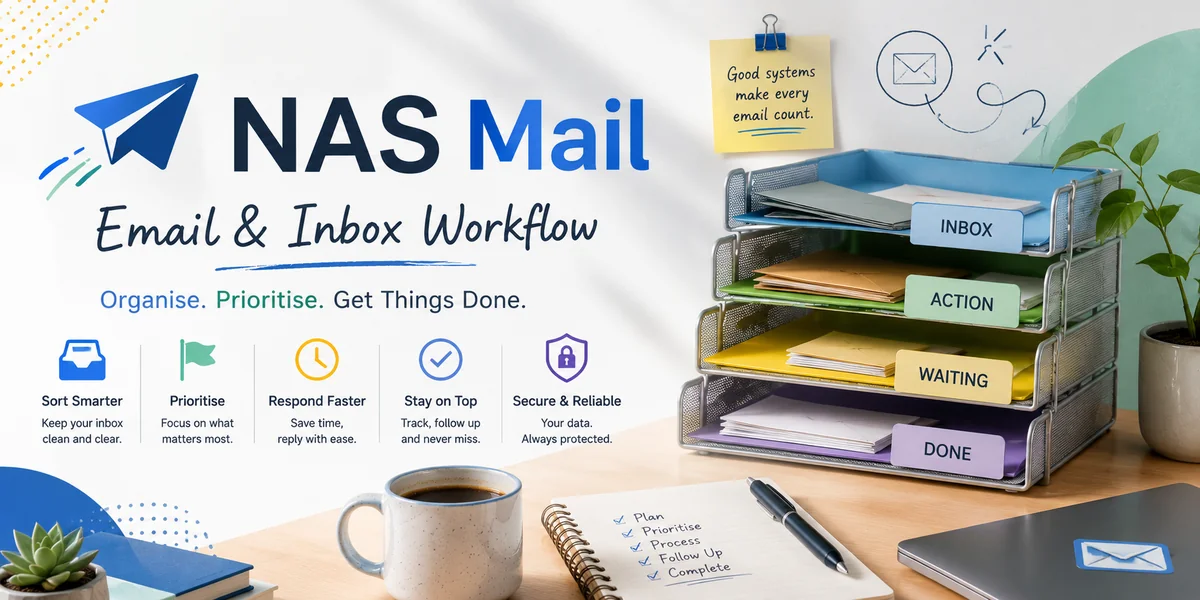
Small-business email problems are often caused by tiny omissions rather than poor intentions: the question was only half answered, the attachment was forgotten, nobody owned the follow-up or a rushed subject line made an important message easy to miss. A short communication checklist gives staff a repeatable final check without turning everyday correspondence into bureaucracy.
Before writing: identify the outcome
Ask what the recipient should know or do after reading. If the answer is unclear, the email is likely to become longer and less useful. One message can contain several questions, but the desired outcome should still be obvious.
Check that email is the right channel. An urgent, emotionally sensitive or highly complex issue may be better handled by telephone or a meeting, followed by email where a written record is useful.
Subject line: make the purpose recognisable
Use a subject that helps the recipient understand the topic without opening the message. Include a useful customer, project or action reference where appropriate, but avoid exposing sensitive information unnecessarily.
When a thread changes topic substantially, consider starting a new message with a more accurate subject rather than extending an unrelated chain indefinitely.
Opening: give enough context
Start with the reason for writing. If the recipient has several projects or conversations with the business, identify which one the message concerns. Avoid making them reconstruct the background from a long quoted thread.
Where the email follows a call or meeting, state that briefly and identify the decision or action being confirmed. This creates a cleaner record for both sides.
Body: answer every material question
Read the incoming message again before sending. Customers often ask several questions in one email, and replying only to the easiest one creates unnecessary back-and-forth. Structure the response so each point can be recognised.
Keep paragraphs focused and distinguish facts from actions still being investigated. If the answer is not yet known, say what will happen next rather than filling the gap with an assumption.
Actions: name who does what next
A professional email should make the next step visible. State what the business will do, what the customer needs to do and any agreed timing that the team can genuinely meet.
Internally, assign ownership rather than assuming somebody copied into the message will act. CC can provide visibility, but it is a weak task-management system.
Attachments and links: check before sending
Confirm that every referenced attachment is present and that it is the correct version. Check links where they are important to completing the customer's action. File names should help recipients understand what they are opening.
Before attaching customer or business information, confirm the recipient list. A polished email sent to the wrong person is still a serious communication failure.
Tone and accuracy: perform a final read
Read the message from the recipient's perspective. Remove unnecessary jargon, unexplained abbreviations and language that could sound abrupt. Check names, dates, figures, references and commitments rather than relying only on spelling tools.
For complaints or tense conversations, avoid replying while reacting emotionally. A calm, factual response with a clear next step is more useful than matching the tone of an angry message.
After sending: make follow-up visible
If the email creates a future action, record it somewhere the responsible person will see it. Do not rely on the sent folder as a reminder system. Customer systems, task tools or a simple managed follow-up list can provide stronger ownership.
The complete checklist is therefore straightforward: purpose, subject, context, questions, actions, attachments, accuracy and follow-up. Small businesses do not need to apply it mechanically to every two-line note, but using it for customer-facing and consequential messages can prevent the ordinary omissions that create avoidable work later.
Turn the checklist into a lightweight review habit rather than a document that is only opened after something goes wrong. A team leader can periodically sample ordinary messages and ask whether the purpose, owner, next action and promised timing were clear to a reader with no background knowledge. Use recurring mistakes to improve the checklist itself: if staff repeatedly omit the same detail, the standard may need a better prompt rather than another reminder. Keep the checklist short enough to use during real work, and separate essential communication controls from optional style preferences so people know what genuinely matters before an email is sent.